From 5 December 2025, the exhibition “Memorie sommerse. Submerged Memories: The Bronzes of the Bridge of Valentinian” opens to the public. Curated by Federica Rinaldi and Agnese Pergola, the exhibition returns to public view an extraordinary group of bronze works associated with the decoration of the Roman bridge now better known as Ponte Sisto.
The materials resurfaced in 1878 during work carried out on the embankments of the Tiber River. For a long time they were kept in the Museum’s storage rooms, but they are now visible and accessible again thanks to extensive restoration and research, which has allowed a new and complete contextualization of the pieces. The exhibition aims to highlight a little-known yet extremely important body of material for reconstructing the monumental topography of Rome.
The decision to bring these artifacts back into the galleries forms part of the Museum’s broader strategy to reactivate access to works preserved in storage. This is also happening in connection with prestigious loans such as the Niobid and the Peplophoros from the Museum—both 4th-century BC Greek originals—which have been lent for the exhibition “Greece in Rome” at the Capitoline Museums – Villa Caffarelli. The reorganization of the display therefore makes it possible to present to the public lesser-known masterpieces of great historical and artistic value.
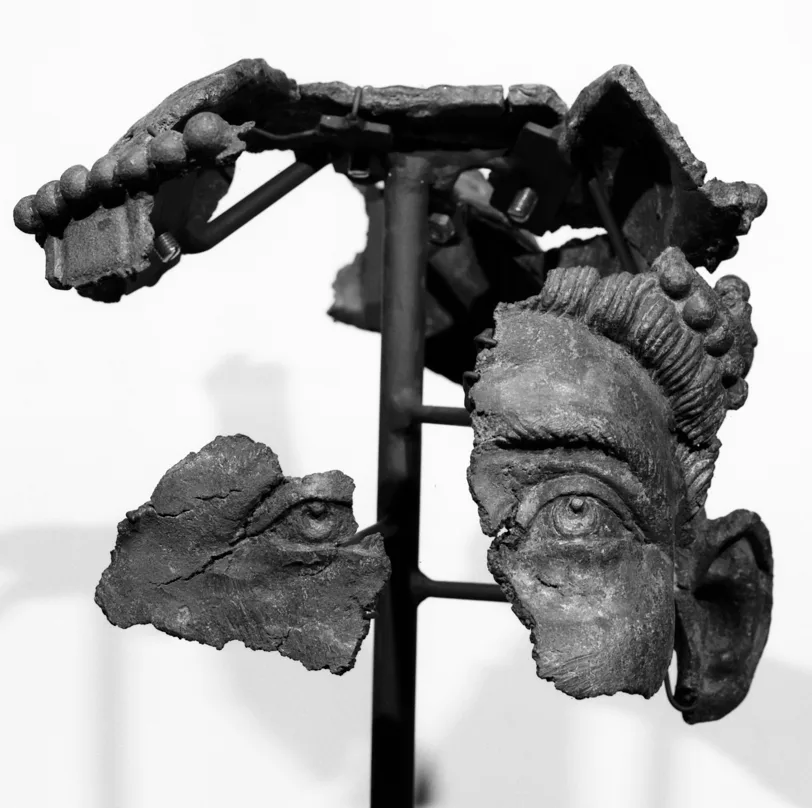
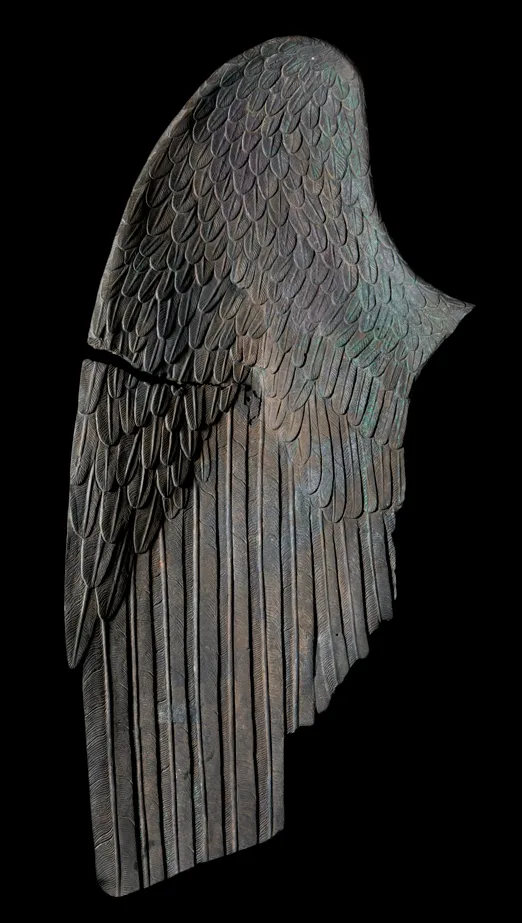
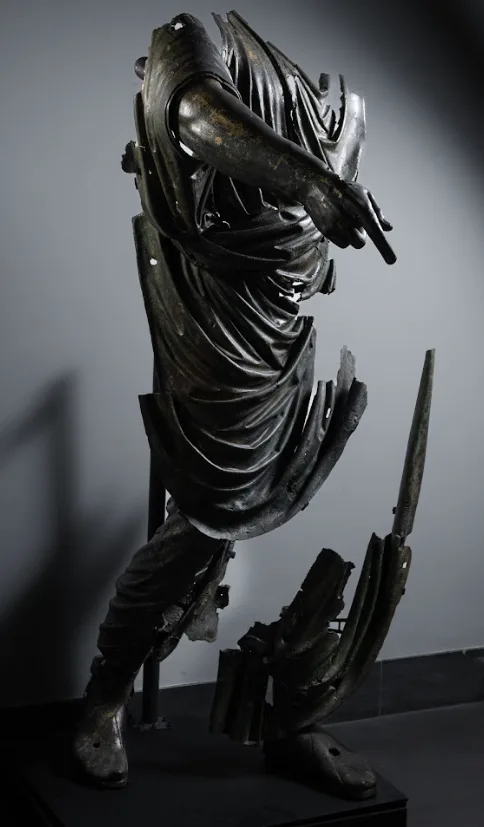
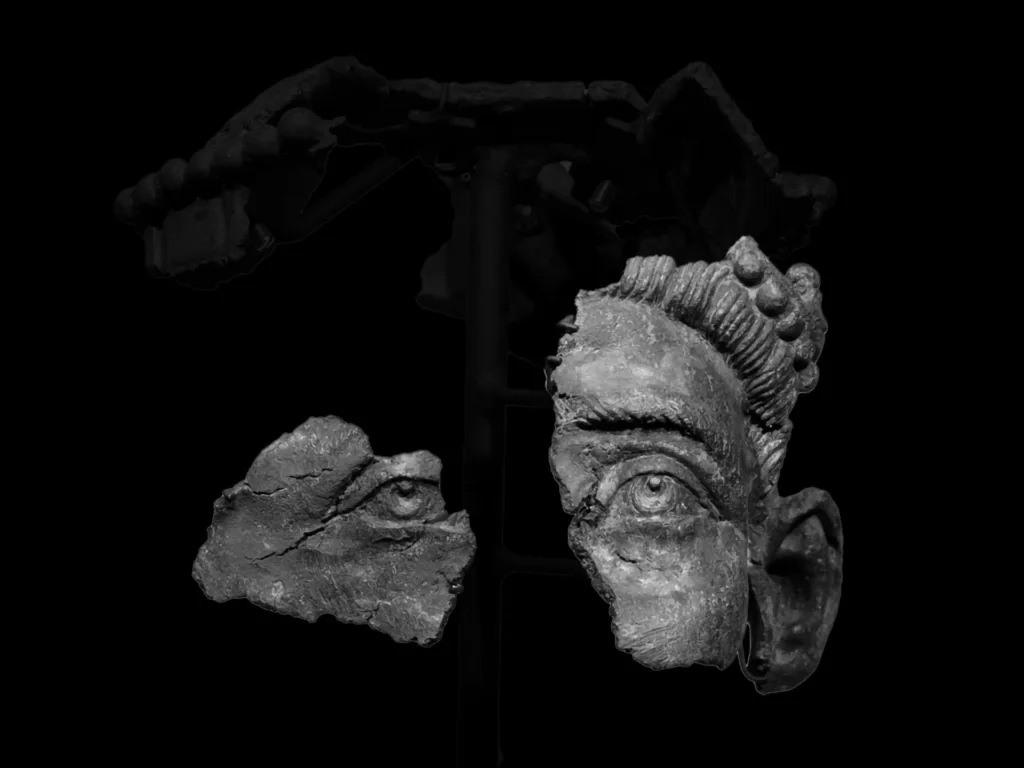
The monographic exhibition presents three works:
-
a diademed male head,
-
a gilded bronze statue of a toga-clad figure,
- the right wing of a Victory.
The display is enriched by a video featuring narration by Silvia Orlandi, professor of Latin epigraphy at Sapienza University of Rome, explaining the large marble dedicatory inscription of Valentinian and his brother Valens, as well as the monumental inscription carved in travertine that once adorned the exterior of the bridge and was specifically designed to be read by those navigating the Tiber River.
This inscription is preserved today in the Cloister of Michelangelo at the Baths of Diocletian.
Alongside the exhibition, a scholarly publication—currently in preparation with the publisher Quasar—will explore all aspects related to the discovery, iconography, reconstruction of the original locations, and restoration of the materials, offering a comprehensive study of this extraordinary sculptural group.