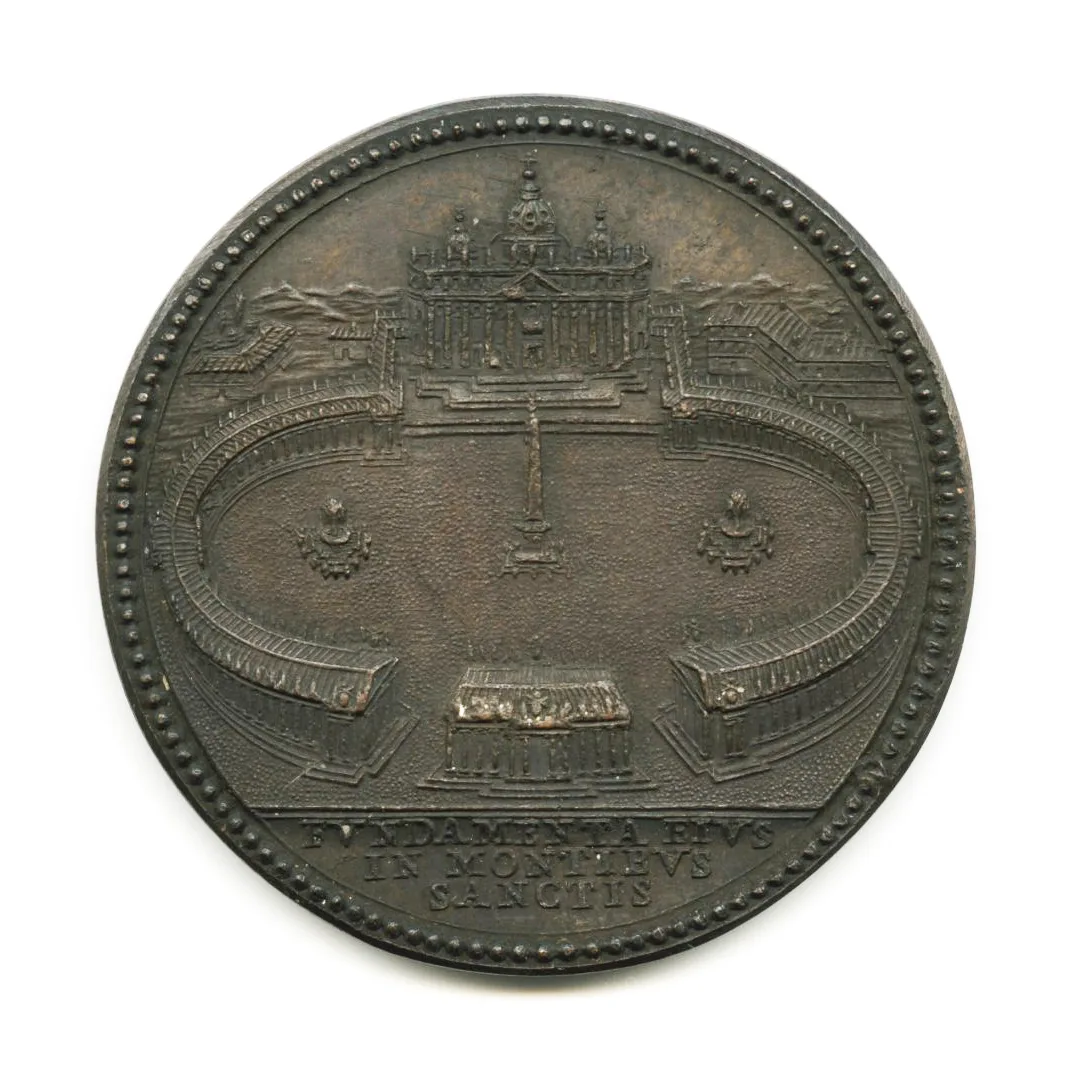
Church statue. Bronze medal with view of the Basilica of Saint Peter (reverse), 19th-century recoinage Coin and Medal Collection of the National Roman Museum
Created in the 17th century by Alfonso Donnino from Toscanella, who left his own collection of antiquities to the Roman College of the Society of Jesus, the Kircherian Museum owes the bulk of its pieces to its first curator, the Jesuit Father Athanasius Kircher. After various ups and downs, primarily associated with the fates of the Jesuit Order, a Ministerial Order enacted in 1913 authorised the division of its collections among new more suitable museum sites. A considerable quantity of material was thus transferred to the Coin and Medal Collection in the National Roman Museum, including the aes grave (heavy bronze) collection, part of the collections of medals and a large quantity of coins and votive objects (including the famous Vicarello Cups) taken from the Vicarello deposit (Rome).
Church statue. Bronze medal with view of the Basilica of Saint Peter (reverse), 19th-century recoinage Coin and Medal Collection of the National Roman Museum
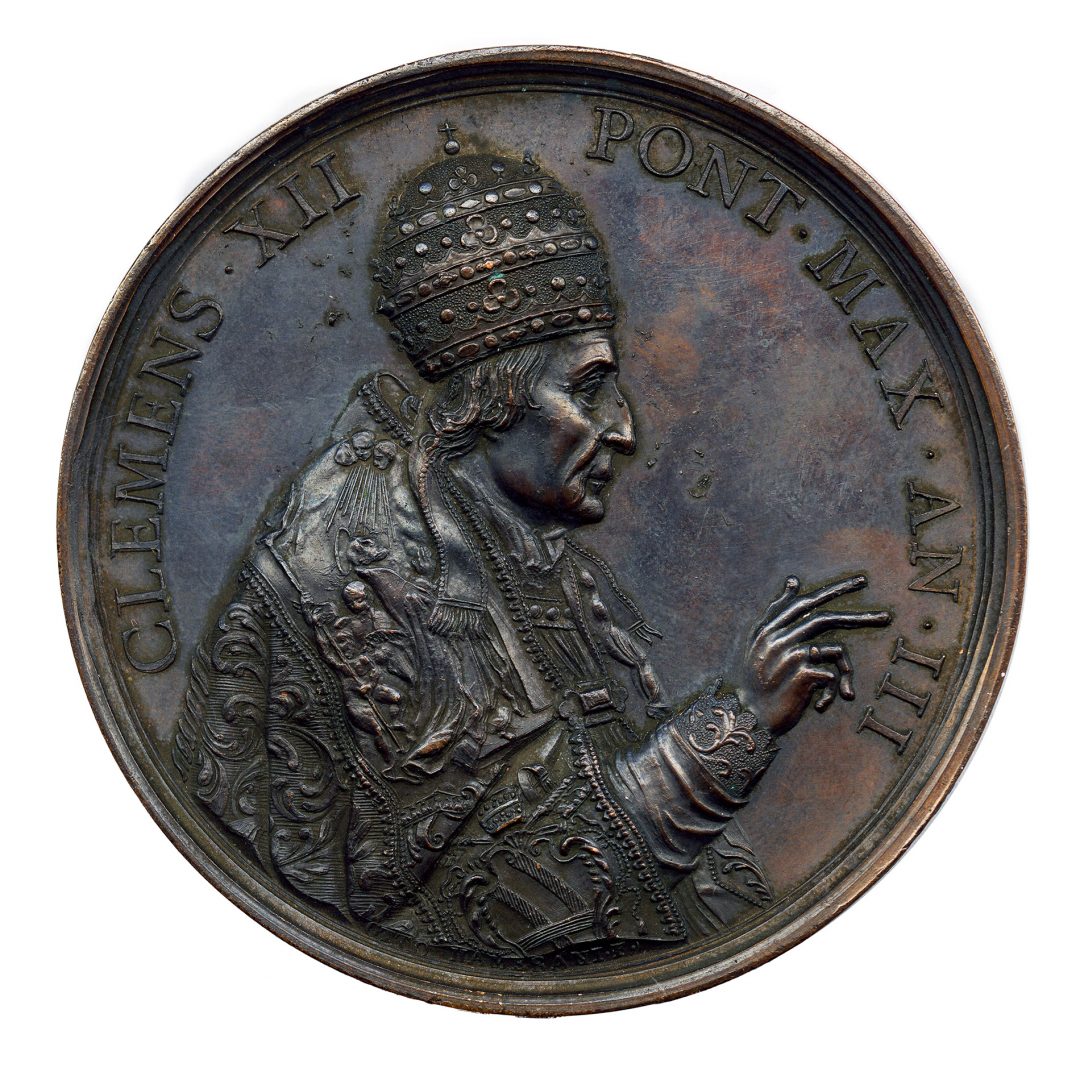
Papal States. Bronze medal with portrait of Pope Clement XII (obverse), 1734 Coin and Medal Collection of the National Roman Museum
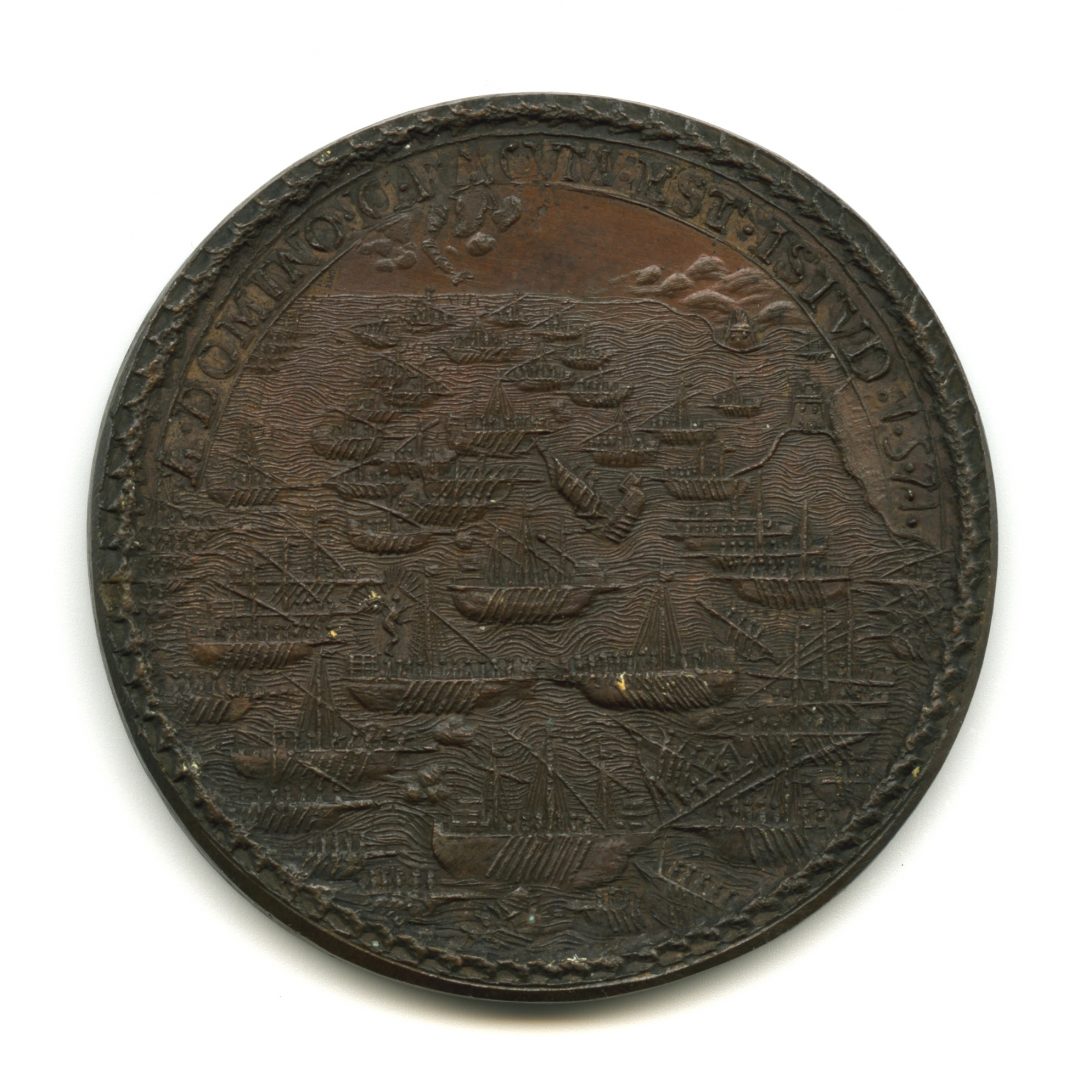
Papal States. Bronze medal depicting scene of the Battle of Lepanto (reverse), 19th-century recoinage Coin and Medal Collection of the National Roman Museum
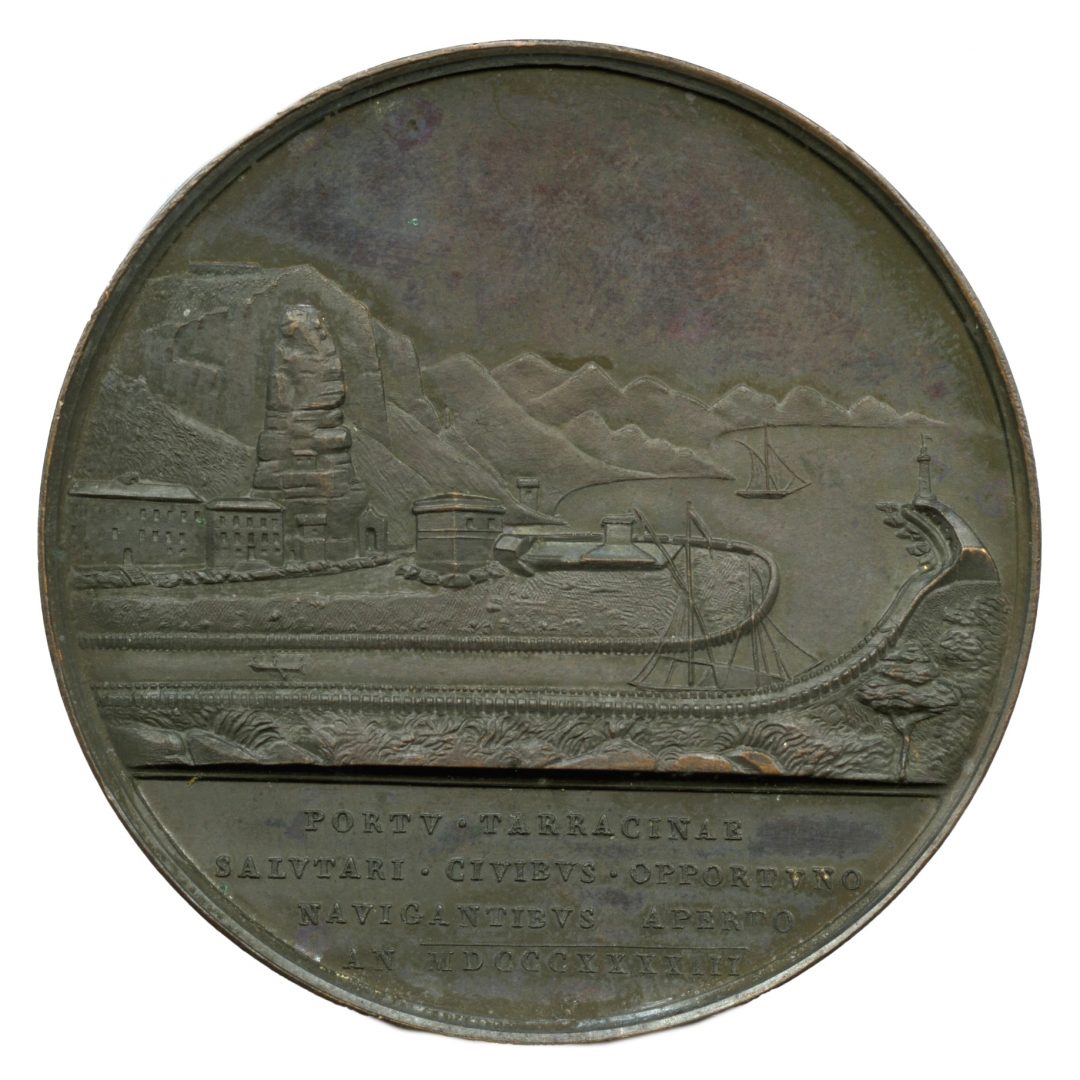
Papal States. Bronze medal depicting a view of the Port of Terracina, 1843 (reverse) Coin and Medal Collection of the National Roman Museum
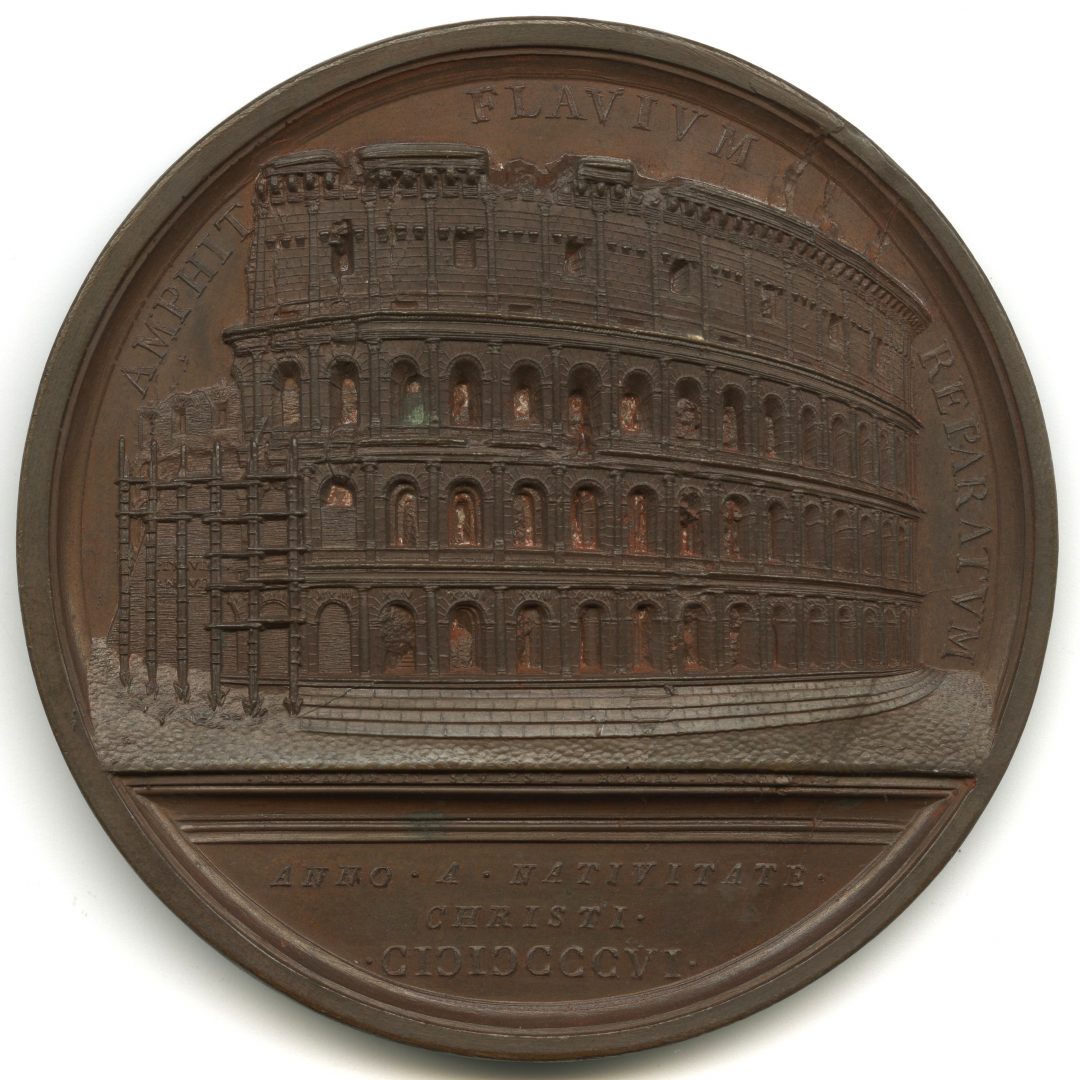
Papal States. Bronze medal for restoration of the Colosseum (reverse), 1807 Coin and Medal Collection of the National Roman Museum
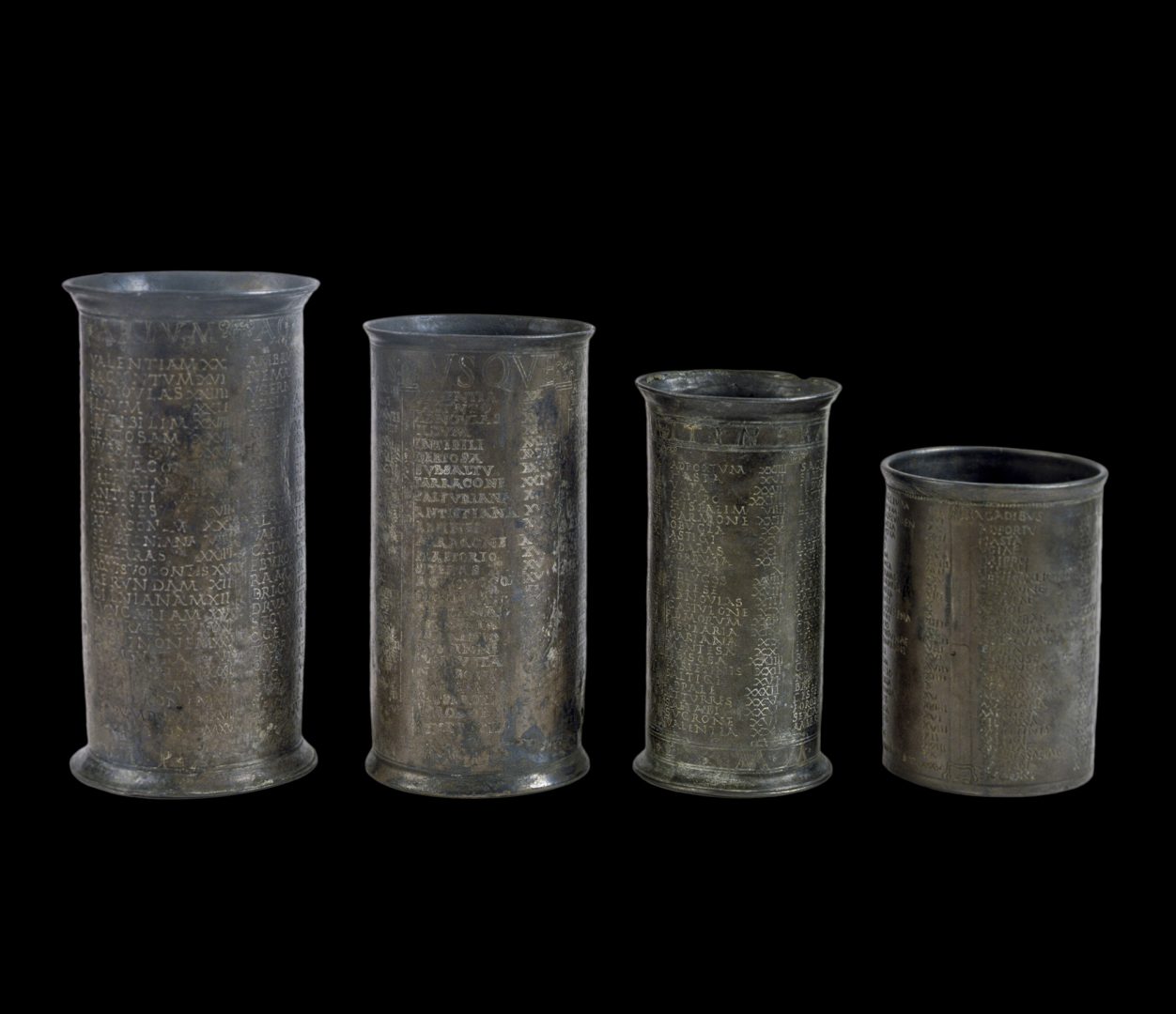
Silver cups detailing itinerary from Vicarello Coin and Medal Collection of the National Roman Museum
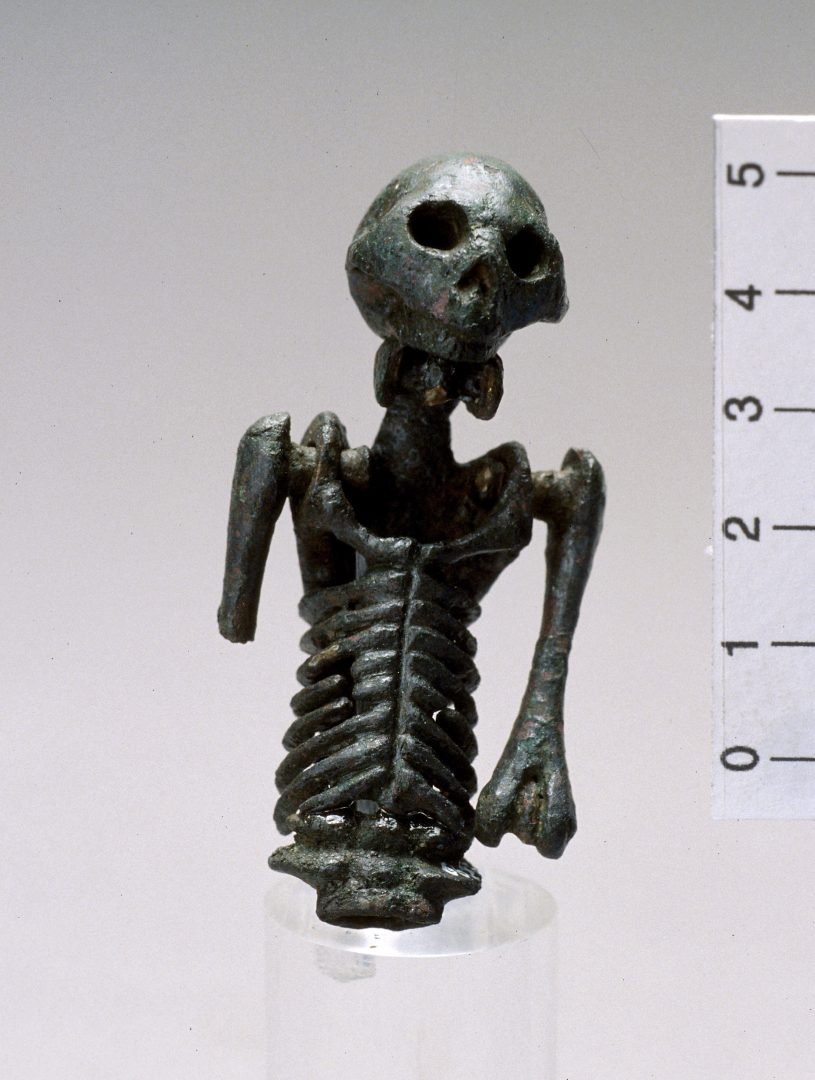
Bronze larva convivialis (memento mori) Coin and Medal Collection of the National Roman Museum
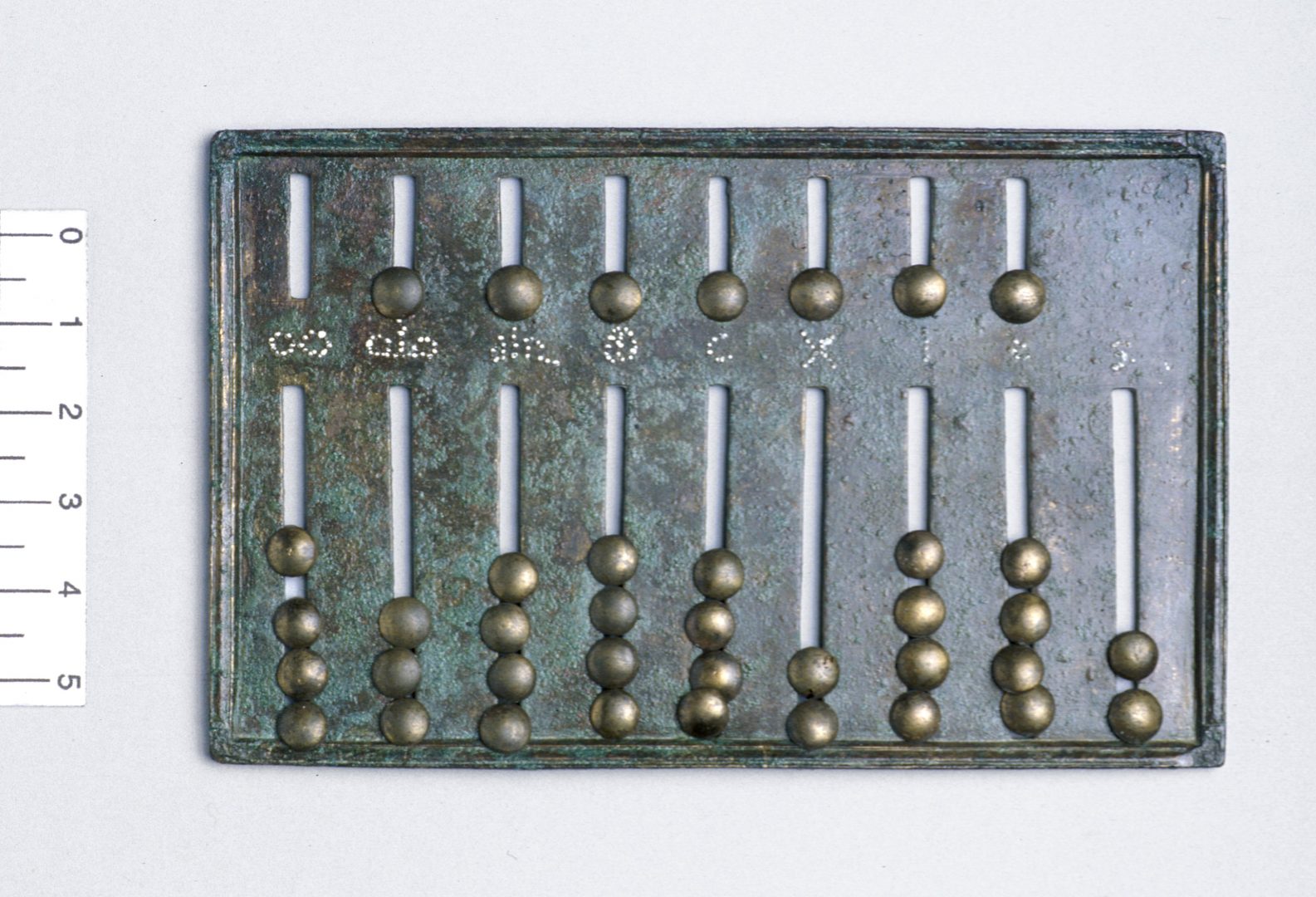
Bronze pocket abacus (instrument for arithmetic calculations) Coin and Medal Collection of the National Roman Museum